Drug-free neurofeedback brain training in New York to sharpen focus, calm stress, and improve sleep —
guided by your own qEEG brain map, not a generic protocol.
Neurofeedback is an evidence-informed, drug-free, non-invasive form of brain training. Sensors read your brainwave activity in real time, and the system gives your brain gentle feedback — helping it build steadier, more efficient patterns through practice.
Instead of masking symptoms, it works with your brain’s own ability to adapt. People come to us to support sharper focus, calmer stress, deeper sleep, clearer thinking through brain fog, better memory, and steady cognitive health as they age.
Personalized. Measurable. Built around your brain — so you can feel more like yourself again.
Sensors read your brainwave activity and set a baseline.
You relax and watch or listen while the system rewards balanced activity.
With repetition, your brain learns healthier self-regulation.
Focus, calm, sleep, and clarity get steadier over time.
People at every stage of life come to us with different goals. A few of the most common:
Professionals, entrepreneurs, students, and athletes who want sharper focus and steadier mental stamina under pressure.
Anyone dealing with tension, a busy mind, restless sleep, or trouble settling emotions at the end of the day.
Adults and students who feel foggy, scattered, or slower to recall — and want clearer, quicker thinking.
People rebuilding focus and energy after a draining illness, including lingering brain fog and mental fatigue.
Adults who want to protect memory, attention, and mental sharpness as they get older.
Families looking for a drug-free way to support attention, calm, and self-regulation in children and teens.
Neurofeedback works with your brain’s own learning ability, helping you build steadier patterns from the inside out — no medication, nothing put into the brain.
“The brain is trainable. Neurofeedback shows it how.”
We start by understanding your brain, then build a plan around it — and adjust as you progress.
A qEEG brain map shows us your starting point, so training is guided by your data — not guesswork.
Every brain is different. Your protocol is chosen around your goals and brain map, then refined as you go.
We use database-guided Z-Score and sLORETA neurofeedback alongside classic amplitude training — matched to your needs.
From your first visit onward, we explain each step and stay with you — so the process feels clear and comfortable.
Before training begins, we record a qEEG brain map — a quick, non-invasive reading from sensors on the scalp. It compares your brainwave patterns against a large normative database to show where activity is over- or under-active.
That map removes the guesswork: it gives us a clear starting point and a benchmark to measure your progress against.
Reads activity across up to 19 sensors on the scalp
Compared to a peer-reviewed normative database
Re-mapped at the end so you can see the change
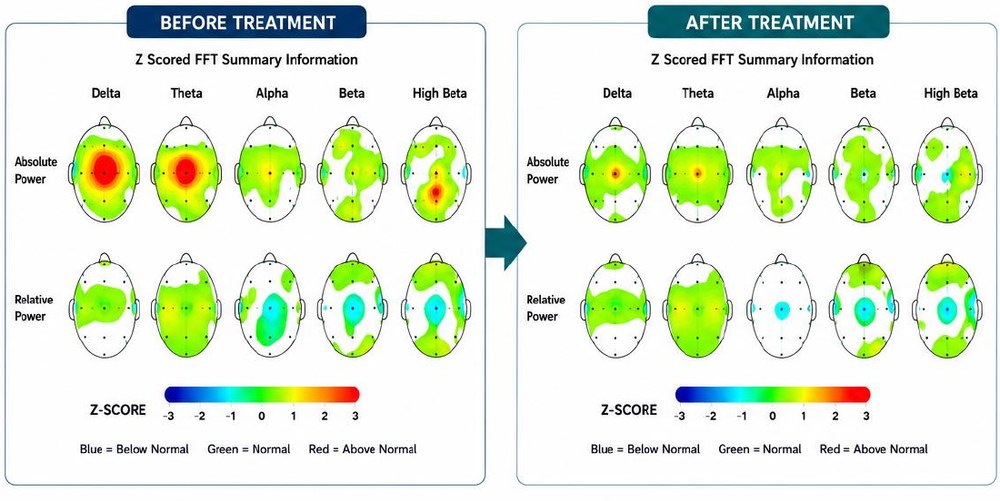
Example qEEG brain map — before and after a training cycle. Warmer colors show over-activity moving toward a more balanced (green) range. Illustrative; individual results vary.

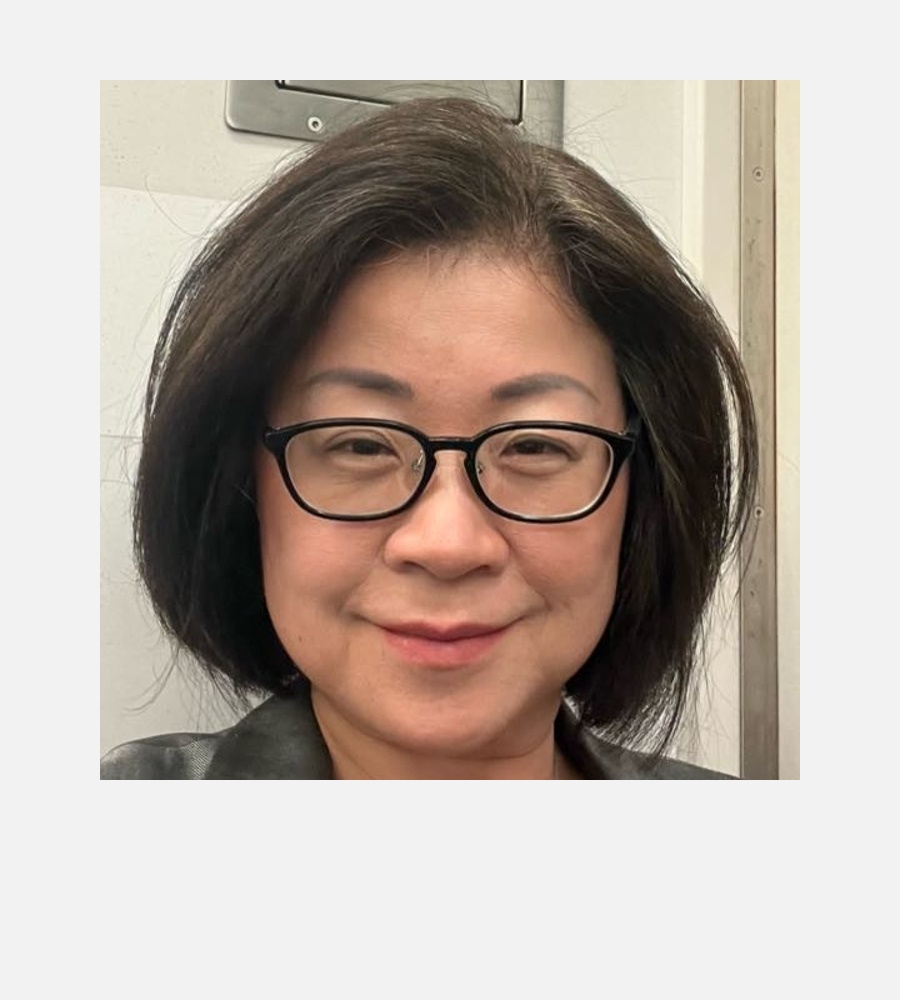
Lead Neurofeedback Specialist · Brain Health
Ellen has more than 15 years of clinical experience in brain health and neurofeedback, with hundreds of client cases over the past decade. She trained under Dr. Hasan Asif, a senior psychiatrist and a pioneer in neurofeedback and TMS. She works in advanced methods including Z-Score, sLORETA, and Infraslow neurofeedback, building every program around the client’s qEEG brain map, goals, and progress — with a focus on attention, stress, sleep, cognitive performance, brain fog, and healthy brain aging, and drawing on functional nutrition where it helps.
M.S. Analytical Chemistry, Drexel University · B.S. Chemistry, Fudan University
Program & Client Care Coordinator
Sharon guides you through the whole experience — from your first call and qEEG preparation to scheduling, education, and follow-up. Her goal is simple: that every client feels informed, comfortable, and well-supported from start to finish.
Certified Nutrition Coach · M.S. Healthcare Management candidate, Johns Hopkins University (2027)
Real outcomes from clients who completed a full program. First names are pseudonyms to protect privacy.
“I slept 8.5 hours the night after my very first session. By the end, my watch was tracking my sleep in the high 90s — a night-and-day difference from where I started.”
“By the end I had much better emotion regulation, no more anxiety, and deeper sleep with more dreams. I feel steady going into competition again.”
“I have more energy, a better mood, and I’m sleeping well again. The brain fog that followed my illness finally started to lift.”
“My focus and memory improved so much, and my sleep got better too. Honestly, I felt like myself again.”
“He’s making progress every week. He’s calmer, more aware, and joining conversations he used to stay out of.”
Read detailed case studies with protocols, session-by-session progress, and before/after qEEG brain maps.
Read Case StudiesEveryone starts with a qEEG brain map. From there, your program is built around your map — most clients train over a 20–30 session cycle. We’ll confirm your exact plan together at your consult.
Your starting point. Required before any neurofeedback training begins.
A complete cycle, personalized to your brain map. Your exact plan is confirmed at your consult.
For tune-ups and ongoing maintenance once you’ve completed a cycle.
Not sure where to start? Book a qEEG brain map and we’ll map out the right plan together — no pressure.
It’s relaxing and completely non-invasive. Sensors on your scalp read your brainwaves while you sit back and watch a screen or listen to audio. Nothing is put into your brain — the system simply gives it real-time feedback so it can learn steadier patterns over time.
Yes. It’s drug-free and non-invasive, and it does not use electrical stimulation — the sensors only read activity. Some people feel a little tired or mentally stimulated afterward, but that usually passes quickly.
Neurofeedback works through repetition, like training for the brain. Some people notice small changes early on, but lasting progress usually takes a cycle of 20 to 30 sessions, depending on your goals, starting point, and consistency.
People come to us for focus, stress, sleep, brain fog, memory, mental fatigue, and peak performance. Neurofeedback isn’t a quick fix, but it can be a powerful way to help your brain regulate itself better over time.
Many people seek neurofeedback for brain fog, mental fatigue, and slower thinking, including symptoms that linger after illness. We don’t claim to treat or cure any condition, but neurofeedback may support better focus and clearer thinking as part of a broader wellness plan.
It measures your brainwave patterns across different areas of the brain and compares them to a normative database. It shows us your starting point so we can personalize your plan and track your progress — rather than guessing.
No — and please don’t change any medication without talking to your licensed healthcare provider first. Neurofeedback can often be used alongside other care, but it isn’t a replacement for medical treatment when that’s needed.
At New York Wellness Group, neurofeedback is offered as a non-medical brain-training and wellness service. We do not diagnose, treat, or cure medical or psychiatric conditions. Our focus is supporting brain performance, self-regulation, stress resilience, sleep, and cognitive wellness.
Start with a qEEG brain map. We’ll show you what’s going on, answer your questions, and map out the right plan together.
Book Your qEEG Brain MapServing Manhattan, Queens & the greater New York area.
Message received. We’ll be in touch soon.
Neurofeedback and qEEG brain mapping at New York Wellness Group are offered as non-medical wellness and brain-training services. They are not a medical or psychiatric treatment, are not intended to diagnose, treat, cure, or prevent any disease, and have not been evaluated by the FDA. Individual results vary. Please consult a licensed healthcare provider for medical concerns, and never stop or change prescribed treatment without their guidance.